
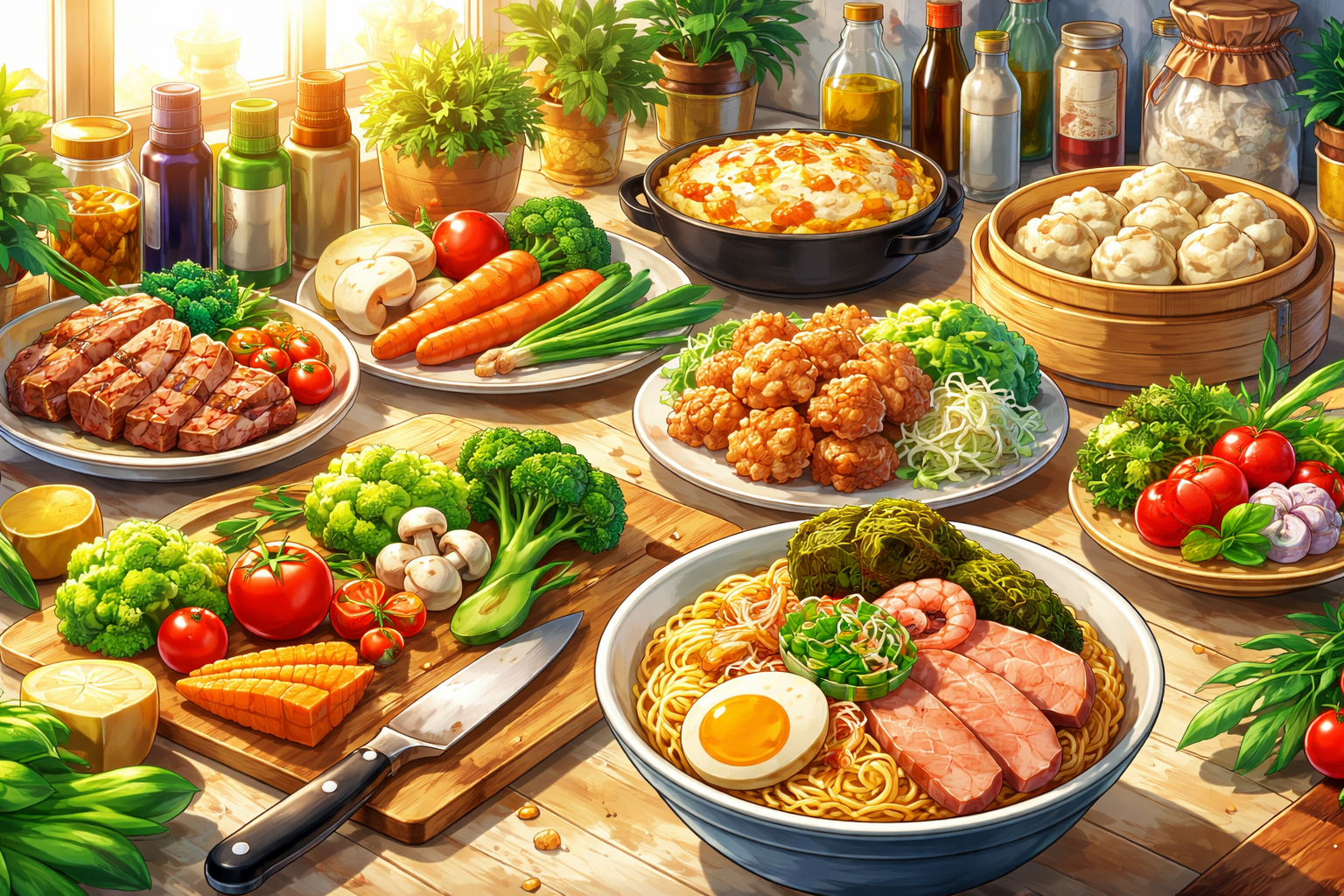
I tend to watch anime the same way I taste food.
Slowly.
Attentively.
Looking for intention.
I notice what the story lingers on. I notice what gets repeated. I notice where the camera pauses. And over time, one thing has become very clear to me:
Some of the most thoughtful food storytelling happening right now isn’t coming from traditional food media.
It’s coming from anime.
Not because anime is trying to teach recipes.
But because it understands something fundamental about cooking — that good food isn’t only about the finished plate. It’s about process. It’s about transformation. It’s about how ingredients behave when you give them heat, time, and attention.
When anime gets food right, it doesn’t rush past it. It slows down for the washing, the chopping, the simmering, the tasting, the adjusting. It treats cooking as something alive.
That’s why these shows don’t just make you hungry.
They make you want to cook.
Not to be perfect.
Not to impress.
But to explore.
Below are twenty cooking-focused anime that consistently make me want to step into the kitchen. They’re not ranked. They’re not competing. They simply represent different ways anime has captured the relationship between ingredients, technique, and curiosity.
Food Wars! Shokugeki no Soma (2015)
Food Wars is dramatic, exaggerated, and unapologetically intense. But beneath the spectacle is something surprisingly grounded: an obsession with ingredient properties. Characters constantly discuss how heat affects texture, how fat carries flavor, how acidity reshapes a dish, how small substitutions can shift balance. The cooking scenes aren’t random — they’re structured. You see layering. You see sequencing. You see intention. For all its over-the-top energy, Food Wars quietly reinforces that great food is designed, not accidental.
Delicious in Dungeon (2024)
Delicious in Dungeon takes a fantasy world and applies real culinary logic to it. Every monster becomes an ingredient that must be evaluated. What part is edible? What part is dangerous? Should this be roasted, stewed, or sautéed? The show constantly asks practical cooking questions, even in absurd circumstances. What makes it compelling is that it respects ingredient behavior. Texture matters. Fat matters. Safety matters. It feels playful, but it’s rooted in genuine culinary reasoning.
Campfire Cooking in Another World with My Absurd Skill (2023)
This series leans into the beauty of fundamentals. Oil heats slowly. Aromatics soften before browning. Proteins are seasoned before they hit the pan. The pacing is calm, almost meditative. Nothing is flashy, yet everything feels intentional. Watching it reminds you that simple food, when cooked thoughtfully, is deeply satisfying. It doesn’t glorify complexity — it honors consistency.
Toriko (2011)
Toriko treats ingredients as rare treasures worth pursuing and protecting. There’s a sense that flavor already exists inside food, waiting to be unlocked. The show doesn’t frame cooking as overpowering ingredients; it frames it as revealing them. That mindset mirrors how many experienced cooks think — your job isn’t to dominate flavor, it’s to understand it.
Sweetness & Lightning (2016)
At its core, this is a story about learning to cook for someone you love. The meals are simple. The process is sometimes clumsy. But that’s what makes it real. You see gradual improvement, small victories, and the emotional weight behind everyday food. It gently emphasizes that cooking is a skill built through repetition and care, not instant mastery.
Yakitate!! Japan (2004)
Bread becomes the vehicle for experimentation in this series. Fermentation, hydration, gluten development — all of it is explored through energetic storytelling. What stands out is how baking is treated as both science and play. Small tweaks create dramatically different outcomes. It quietly reinforces that cooking is about paying attention to variables.
Restaurant to Another World (2017)
Each episode centers on a single dish served to someone from another world. The focus isn’t spectacle — it’s comfort. Food becomes a bridge between cultures and experiences. The show lingers on the way a dish makes someone feel, reinforcing that flavor is emotional as much as technical.
Isekai Izakaya: Japanese Food From Another World (2018)
This series feels like sitting inside a cozy neighborhood pub. The dishes are straightforward — grilled skewers, simmered vegetables, chilled noodles — yet they’re prepared with care. What stands out is how everyday food is treated as meaningful. It reinforces that cooking doesn’t have to be elaborate to be powerful.
Today’s Menu for the Emiya Family (2018)
This anime moves gently. Meals unfold step by step, often tied to seasons or small life moments. You notice timing, preparation, sequencing. It feels like a calm cooking journal — approachable, practical, and rooted in everyday nourishment.
Cooking Master Boy (1997)
A classic adventure through traditional Chinese cuisine. The focus on knife skills, heat control, and regional dishes reinforces that technique matters. Craft matters. Heritage matters. It frames cooking as a discipline that requires respect.
True Cooking Master Boy (2019)
The modern reboot keeps that respect for tradition while refreshing the visuals and pacing. It reinforces that recipes carry history, and learning to cook means learning context.
Yumeiro Patissiere (2009)
Pastry demands precision, and this series leans into that. You watch characters struggle with balance, structure, and timing. It emphasizes patience and incremental growth — two qualities that define real cooking journeys.
Kakuriyo no Yadomeshi (2018)
Set in a spirit-world inn, this series centers on hospitality. Meals are prepared consistently, thoughtfully, and with care. It reminds you that feeding people well is as much about reliability as creativity.
Ramen Daisuki Koizumi-san (2018)
A deep exploration of ramen culture, this show highlights nuance. Broths vary. Noodles vary. Toppings vary. Small adjustments create entirely different experiences. It reinforces that even one dish can hold endless variation.
Gourmet Girl Graffiti (2015)
Food becomes a vehicle for connection. The meals are simple, but the moments around them carry weight. It gently reinforces that flavor is shaped by context — who you eat with matters.
Ben-To (2011)
Comedic and chaotic, yet surprisingly attentive to detail. Even discounted convenience-store food is treated with excitement and appreciation. It challenges the idea that good food must be expensive.
Antique Bakery (2008)
Centered on a pastry shop, this series highlights craft and customer experience. You see desserts being assembled and served, and you feel the relationship between baker and guest.
Cinderella Chef (2018)
Blending time travel with historical Chinese cuisine, this series explores adaptability. Modern knowledge meets traditional kitchens, reinforcing that cooking evolves while still respecting its roots.
Silver Spoon (2013)
Rather than focusing solely on cooking, Silver Spoon explores farming and food production. It reminds you that cooking begins long before the stove. Ingredients have labor behind them. That awareness changes how you cook.
Ristorante Paradiso (2009)
Set inside an Italian restaurant, this series emphasizes atmosphere and rhythm. Prep, service, repeat. It feels grounded. It reinforces that good food exists within systems — teamwork, patience, and consistency.
Across very different stories and settings, one message keeps repeating:
Cooking is not about shortcuts.
It’s about attention.
It’s about understanding ingredients, noticing patterns, adjusting when something changes, and growing over time.
Anime understands this in a way that feels surprisingly authentic.
And maybe that’s why these shows inspire people to cook.
They make the process visible.
They make skill feel attainable.
They make curiosity feel welcome.
And that’s where good cooking begins.
Leave a Reply