
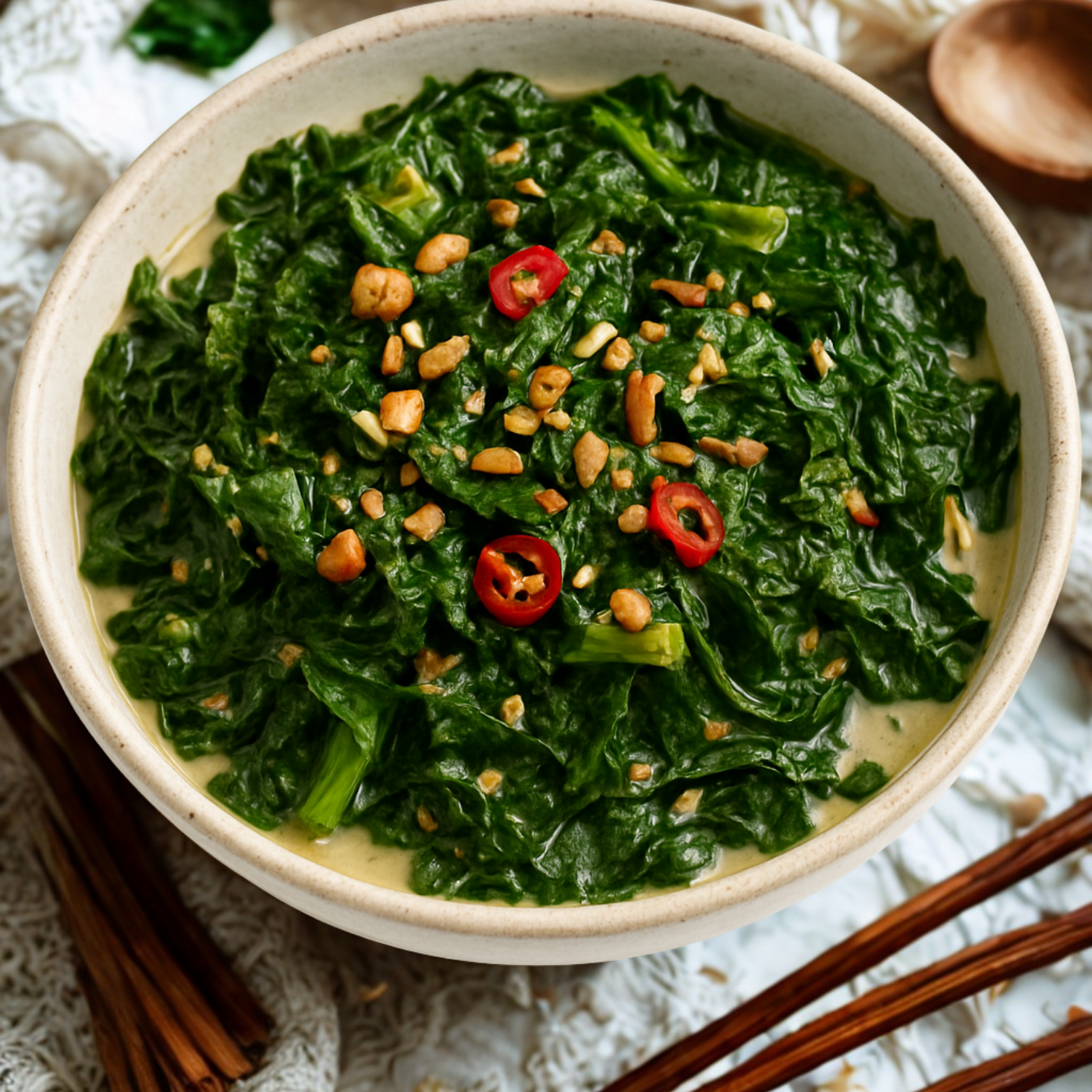
Winter greens don’t get enough love. They’re hearty, affordable, nutrient-dense, and—most importantly—incredibly flavor-flexible. Collards, kale, and Swiss chard naturally hold onto aromatics, fats, and acids in a way that makes them ideal for flavor exploration during the colder months.
This season, instead of defaulting to the usual garlic-and-smoke profile, let’s take winter greens on a global flavor trip. Below are flavor paths that instantly transform these humble greens into bold, winter-friendly dishes that feel new, vibrant, and comforting. Winter greens have:
- Structure — they hold up to braising, sautéing, and simmering
- Earthiness — a natural base that pairs beautifully with spices and acid
- High surface area — tons of nooks that cling to bold flavors
- Seasonal availability — affordable, accessible, and at their peak right now
Think of them as the perfect canvas for global flavors—ready to soak up aromatics and take on unexpected personalities.
Flavor Path 1: Thai Coconut-Lime Comfort
When to choose this: When you want something cozy but bright.
Core aromatics:
- Coconut milk
- Lime zest or juice
- Lemongrass
- Ginger
- Garlic
- Fish sauce or soy sauce (optional umami)
How to use it:
Simmer your greens briefly in coconut milk with ginger and lemongrass until tender. Finish with lime, something crunchy (like peanuts), and fresh herbs. This gives collards or kale a silky richness with citrusy lift.
Try it with:
- Coconut-lime braised collards
- Kale over jasmine rice with chili crisp
- Swiss chard stir-fried with garlic + lime leaf
Flavor Path 2: North African Warm Spice + Citrus
When to choose this: When you want deep warmth without heavy richness.
Core aromatics:
- Harissa
- Orange zest
- Cumin
- Coriander
- Olive oil
- Fresh mint or parsley
How to use it:
Start with olive oil, garlic, and harissa. Add greens and finish with orange zest and herbs. The sweetness of orange balances harissa’s heat while the spices enhance the greens’ earthiness.
Try it with:
- Harissa-orange sautéed kale
- Collards with chickpeas + preserved lemon
- Chard with raisins + toasted almonds
Flavor Path 3: Vietnamese Five-Spice & Star Anise Broth
When to choose this: When you want something brothy, aromatic, and soothing.
Core aromatics:
- Star anise
- Cinnamon
- Ginger
- Green onion
- Soy sauce or fish sauce
- Black pepper
How to use it:
Simmer star anise, cinnamon, and ginger in broth. Add greens until just tender. The result is savory, lightly sweet, and deeply warming.
Try it with:
- Pho-inspired collard greens
- Five-spice kale noodle bowl
- Brothy Swiss chard with rice vinegar
Flavor Path 4: Caribbean Allspice + Citrus
When to choose this: When you want brightness with a little island heat.
Core aromatics:
- Allspice
- Scotch bonnet (or a milder chili)
- Lime
- Thyme
- Garlic
- Scallions
How to use it:
Quick-sauté your greens with garlic, thyme, scallions, and allspice. Finish with lime. This profile gives winter greens a punchy, tropical energy that still feels winter-appropriate.
Try it with:
- Lime-allspice collards
- Kale with sweet potato and thyme
- Chard with pineapple vinegar (if you have it!)
How to Build Your Own Flavor Path
To make your own flavor direction, think of winter greens as needing three things:
- Aromatic base (garlic, ginger, onion, chili)
- Primary flavor identity (spices, pastes, herbs)
- Finishing contrast (acid, crunch, fresh herbs)
Mix and match according to mood, season, and what’s already in your pantry.
Mini Menu Ideas
- Thai Coconut Braised Collards + Rice Noodles + Chili Crisp
- Harissa Kale with Roasted Carrots + Creamy Yogurt
- Pho-Style Swiss Chard Soup with Rice + Scallions
- Caribbean Kale with Sweet Potato Mash + Lime
Winter greens don’t need to feel repetitive or heavy. With just one new aromatic or spice blend, you can shift the entire personality of your dish. Treat them as a playground for flavor—and let them take you on a seasonal, global journey that keeps meals fresh all winter long.
Leave a Reply