
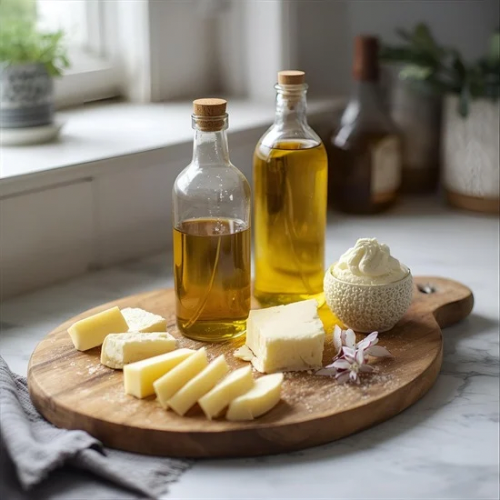
Most home cooks instinctively reach for the same two fats every time they cook: olive oil and butter. Reliable? Absolutely. Flavorful? Yes. But using the same fat for every dish means missing out on one of the easiest and most powerful ways to layer flavor.
Fat doesn’t just carry flavor — it creates it.
It contributes aroma, richness, mouthfeel, and even the emotional tone of a dish. Different fats introduce different personality traits, and once you understand that, you can use fat as intentionally as any spice.
Here’s how to choose the right fat depending on the flavor direction you want to create.
1. Olive Oils: From Bright to Buttery
Olive oil isn’t one ingredient — it’s a spectrum.
Peppery, grassy olive oil:
- Best for: greens, legumes, finishing dishes
- Flavor effect: adds brightness and bite
- Seasonal fit: winter veg & soups that need lift
Buttery, mild olive oil:
- Best for: slow-cooked dishes, braising, roasting
- Flavor effect: adds roundness without taking over
2. Coconut Milk & Coconut Oil: Creamy Sweetness + Fragrance
These ingredients don’t just add richness — they add aroma.
Great for: aromatics, greens, curries, winter comfort meals.
Why use it:
- Softens heat from chilies
- Enhances warming spices
- Adds body without heaviness
Use this when you want a dish to feel soothing, lush, and fragrant.
3. Animal Fats: When You Want Depth & Power
Rendered chicken fat, bacon fat, duck fat, and beef tallow are deeply flavorful.
What they do in a dish:
- Add smoky, savory depth
- Boost browning
- Pair well with bitter veg (kale, collards, cabbage)
Use these sparingly when you want a dish to feel grounding and robust.
4. Neutral Oils:
When You Want Flavor to Come From the Spices**
Grapeseed, canola, and sunflower oil fade into the background — which is exactly their job.
Use when:
- You’re blooming spices
- You want spicy heat without competing aromas
- You need clean, crisp frying
These let the spices do the talking.
5. Nut & Seed Oils:
Your Secret Finishing Weapon**
Toasted sesame, walnut, pumpkin seed, and pistachio oils are too potent for cooking — but as finishing oils, they are transformative.
Drizzle them on:
- Roasted vegetables
- Noodles
- Soups
- Greens
- Grain bowls
They add aroma, luxury, and a sense of intention.
How to Pick the Right Fat Every Time
Ask yourself:
What do I want the dish to feel like?
- Cozy → coconut milk, butter
- Bright → grassy olive oil
- Bold → animal fats
- Clean → neutral oils
- Nutty/complex → toasted seed oils
With this approach, fat becomes part of your flavor strategy — not just a cooking default.